
Table of Contents
- What Is State Disability Insurance (SDI)?
- Voluntary Disability Insurance vs. SDI: Key Differences
- Private Disability Insurance as an SDI Alternative
- Supplemental Disability Insurance Benefits Explained
- How to File for Disability Insurance: Step-by-Step Process
- Comparing Top Private Disability Carriers
- Tax Implications and Benefit Offset Considerations
- Which SDI Alternative Is Right for You?
- Frequently Asked Questions
Last Updated: September 23, 2026
What Is State Disability Insurance (SDI)?
California's State Disability Insurance program provides temporary income protection to workers who cannot work due to non-job-related illness or injury. SDI is a mandatory, state-run program funded through payroll deductions. It replaces a portion of your wages while you recover, typically covering up to 60-70% of your regular earnings for up to 26 weeks.
SDI ensures you have income during recovery, but it has limits: it doesn't cover disabilities lasting longer than six months, and benefits may not fully replace your lost income if you're a higher earner.
This is where understanding SDI insurance alternatives becomes important. Many Californians discover that state coverage alone isn't enough to protect their household if a serious illness or injury keeps them from work for months or years. At Peace & Grace Insurance Services, we help clients evaluate whether SDI meets their needs or whether supplemental private coverage makes sense for their situation.
Voluntary Disability Insurance vs. SDI: Key Differences
Voluntary Disability Insurance (VDI) is an optional, employer-sponsored plan that supplements state SDI. Unlike mandatory SDI, VDI is elective and lets you customize benefit amounts, waiting periods, and coverage duration to match your situation.
| Feature | State SDI | Voluntary Disability Insurance |
|---|---|---|
| Enrollment | Mandatory for most employees | Optional, employee-elected |
| Premium Cost | Shared (employer may contribute) | Employee-paid |
| Benefit Amount | Set by state formula | Customizable |
| Maximum Duration | 26 weeks | Varies by plan (often longer) |
| Coverage Type | Partial wage replacement | Can be more comprehensive |
| Waiting Period | 7 days | Customizable |
If your employer offers VDI, review it alongside state SDI to see your complete income protection. Some workers elect both, using VDI to cover the gap between SDI benefits and what they need to maintain their lifestyle.
Private Disability Insurance as an SDI Alternative
For self-employed workers and 1099 contractors, private disability insurance fills a critical gap since California's SDI only covers W-2 employees. You purchase a policy directly from an insurer, which pays benefits if you become disabled per the policy's definition. Benefits can be higher than SDI and extend for years rather than months. The trade-off is cost and rigorous underwriting, insurers evaluate your health history, occupation, and income before approving coverage.
Short-Term vs. Long-Term Disability Coverage
Short-term disability (STD) covers disabilities lasting weeks to six months, replacing 60-70% of income with short waiting periods. Long-term disability (LTD) covers months to years until retirement, replacing 40-60% of income. The ideal approach combines both: short-term protects initial recovery, while long-term protects against catastrophic financial impact from permanent or extended disability.
Own-Occupation vs. Any-Occupation Definitions
This distinction matters more than most people realize. It determines when the insurance company considers you "disabled" and obligated to pay benefits.
Own-occupation means you're disabled if you cannot perform your specific job duties, even if you could work elsewhere. A surgeon who loses fine motor control is disabled under own-occupation, even if she could do administrative work. Any-occupation means you're disabled only if you cannot work in any job you're reasonably qualified for. Own-occupation is more generous and expensive; any-occupation costs less but provides less protection.
Private disability carriers often use own-occupation definitions for higher-benefit plans and any-occupation for basic coverage. State SDI uses a modified approach, evaluating whether you can perform your customary occupation.
Supplemental Disability Insurance Benefits Explained
Supplemental coverage bridges the gap between SDI payments and your actual needs. If SDI replaces 60% of your $5,000 monthly income ($3,000) but your expenses are $4,500, supplemental coverage fills that $1,500 gap. Supplemental policies come as employer-sponsored plans, individual policies, or "integrated" plans that coordinate with SDI.
Supplemental coverage offers higher total income replacement (80-90% combined with SDI), extended duration beyond SDI, flexible benefit design, and peace of mind. For higher earners, it's nearly essential, if you earn $8,000 monthly but SDI maxes out at roughly $1,300 per week, the gap is substantial. Supplemental insurance ensures your family maintains financial stability during recovery.
How to File for Disability Insurance: Step-by-Step Process
Filing a disability claim requires documentation, timing, and attention to detail. Missing a deadline or submitting incomplete paperwork can delay or deny your benefits.
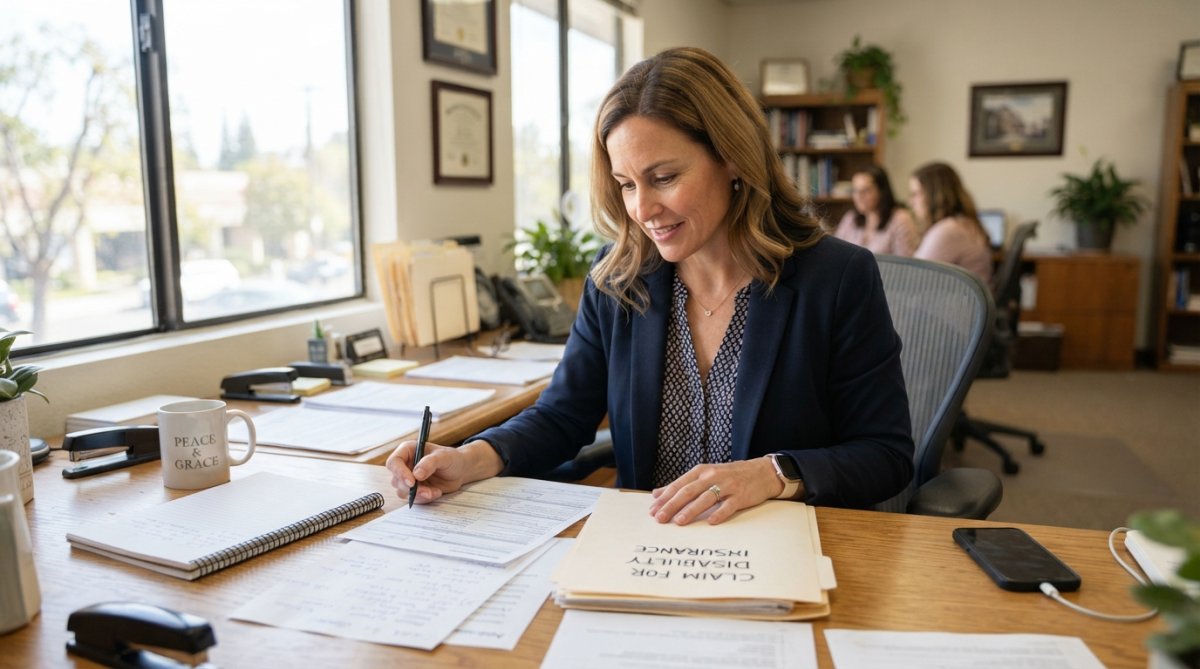
Step 1: Notify your employer immediately. Call your HR department as soon as your doctor advises you cannot work. Most plans require filing within 30 days of disability start date.
Step 2: Obtain medical certification. Your doctor must document your condition, treatment, and work restrictions. Be specific about your job duties so the statement reflects whether you can perform them.
Step 3: Complete the claim form. Request the official form from your benefits department or carrier. Fill it out completely with your policy number, disability start date, and last day of work.
Step 4: Gather supporting documents. Collect pay stubs, tax returns (if self-employed), and relevant medical records.
Step 5: Submit everything at once. Don't submit documents piecemeal. A complete package speeds processing.
Gathering Required Medical Documentation
Your physician's statement must clearly state the diagnosis, current treatment, prognosis, specific work restrictions, expected duration, and any hour or type-of-work restrictions. Vague statements won't suffice, insurers need specifics. For ongoing claims, you'll need periodic recertification confirming you're still disabled and following treatment. Stay in regular contact with your healthcare provider to ensure timely completion.
Understanding the Claims Review Timeline
State SDI typically processes claims within 7-10 business days; private claims take 2-4 weeks. During review, insurers verify employment and income, review medical records, check for exclusions, calculate benefits, and determine your waiting period (7, 14, or 30 days). Benefits don't start immediately, they begin after the waiting period ends. If denied, appeal immediately with additional medical evidence.
Comparing Top Private Disability Carriers
If you're evaluating private disability insurance as an SDI alternative, understanding the major carriers helps you make an informed choice. Each brings different strengths to income protection.
Peace & Grace Insurance Services helps clients navigate private disability options by explaining how each carrier's definitions, benefit structures, and underwriting align with your specific situation. Rather than pushing a single carrier, we review multiple options so you understand the trade-offs in cost, coverage, and claims handling.
Mutual of Omaha offers straightforward disability income protection with monthly benefits ranging from affordable entry-level plans to comprehensive coverage. Their policies are known for accessible underwriting and competitive premiums at lower benefit levels. They work well for workers wanting basic supplemental coverage without complexity.
Guardian Life Insurance Company of America specializes in high-quality disability policies favored by professionals and high earners. Their own-occupation definitions are strong, and their reputation for claims handling is excellent. Guardian policies cost more but provide strong protection and flexibility in policy design.
The Standard brings deep expertise in disability insurance specifically. They offer specialized own-occupation definitions tailored to various professional industries, physicians, attorneys, dentists, and other specialists. If you work in a specialized field, The Standard understands the nuances of your occupation.
Breeze provides a digital-first approach, allowing you to compare multiple carriers' policies online and apply without extensive paperwork. This works well if you're tech-savvy and want transparency in comparing options side-by-side. Their simplified process appeals to younger workers and those comfortable with digital applications.
Each carrier has different underwriting standards, so approval isn't guaranteed.
Tax Implications and Benefit Offset Considerations
Here's a detail many people overlook: the tax treatment of disability benefits depends on who paid the premiums.
Which SDI Alternative Is Right for You?
The answer depends on your employment status, income level, occupation, and risk tolerance.
Frequently Asked Questions
What is the difference between California SDI and private disability insurance?
California State Disability Insurance (SDI) is a mandatory state program that replaces part of your wages if you cannot work due to non-job-related injury or illness. It covers about 60% of your wages up to a state-set maximum. Private disability insurance, by contrast, offers more customizable benefit amounts, longer coverage periods, and often includes own-occupation definitions that protect your specific profession. Private policies also typically have shorter waiting periods and higher wage replacement percentages, though they require underwriting and premium payments.
Can I have both state disability and private disability insurance?
Yes, you can carry both SDI and private disability insurance simultaneously. Many people do this to close the income gap that SDI alone leaves. Since SDI replaces only about 60% of wages up to a maximum, private disability insurance can supplement that benefit. However, most private policies include an offset clause, meaning your total benefits from all sources cannot exceed a certain percentage of your pre-disability income. Peace & Grace Insurance Services can help you structure coverage so both policies work together effectively.
What are the benefits of private short-term disability coverage?
Private short-term disability coverage typically begins after a shorter waiting period (often 0-14 days) compared to SDI's waiting period, gets you income protection faster when you need it most. Short-term plans usually cover 3-6 months of disability, replace a higher percentage of your wages than SDI, and often include riders for partial disability or recovery benefits. They're especially valuable for self-employed workers and gig economy professionals who don't qualify for SDI, and for employees who want faster benefit payments and less bureaucracy.
Do I need supplemental disability insurance if I live in California?
Whether you need supplemental coverage depends on your income level and financial obligations. If SDI's benefit maximum covers your essential expenses, you may not need it. However, if you have a mortgage, dependents, or a higher income, the gap between SDI benefits and your actual expenses can be significant. Supplemental disability insurance bridges that gap, protecting your standard of living if you become unable to work. A Peace & Grace agent can review your specific situation and help you decide if supplemental coverage makes sense for your circumstances.